
Small Finds #6
The Barrowland sign

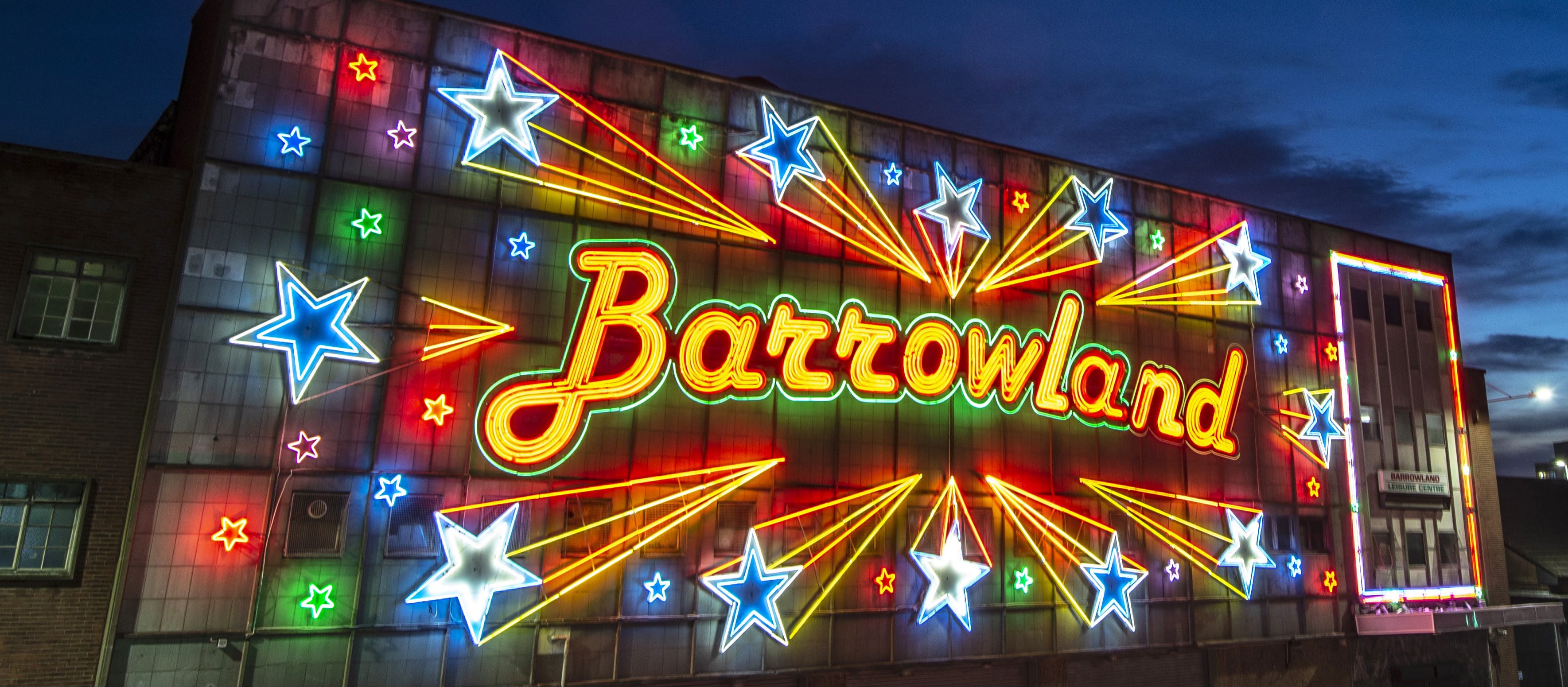
Three hours until showtime, three hours before sundown, Tom Joyes starts the magic – as so often these forty years – by switching on the sign.
The turn of a silver handle is all it takes and the fuses in the control unit start to blink. Each is marked with a different letter on a strip of tape.
B A R R O. That’s the first five.
W L A N D. That’s the next.
The whole thing spells Barrowland and Barrowland spells pleasure.
Ten letters. Thirty-six stars. Two hundred and forty volts. Put like that it does not sound like much, but the neon sign of the Barrowland Ballroom is so much more – a gaudy, gallus pleasure beacon that for generations has shone into the Glasgow night, reflected in the mirrored windows of rock band coaches, in rain-choked Gallowgate gutters, and in the eyes of music fans intent on the good time to end all good times.
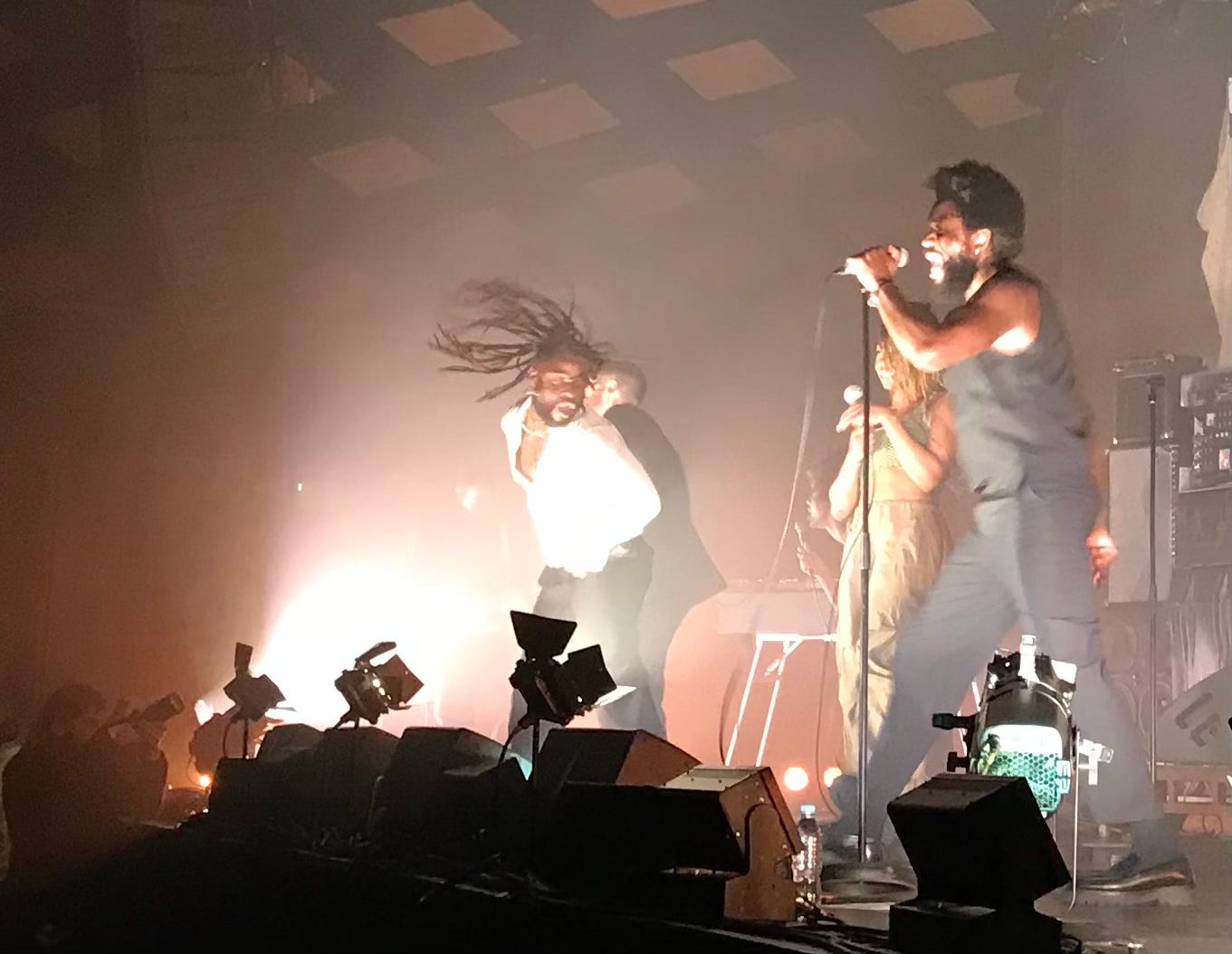
The original ballroom, built in 1934, burned down in 1958. The present building dates from 1960, but its life as a rock venue began in 1983 when Simple Minds, glittering and ascendant, used it to film the video for Waterfront in front of a live audience. ‘The Apollo was owned by The Who, by Alex Harvey, by The Rolling Stones. The Barrowland was ours,’ the group’s manager Bruce Findlay once told me. ‘I love the fact that we were party to that place being revitalised. We made a no-go area into a go area.’
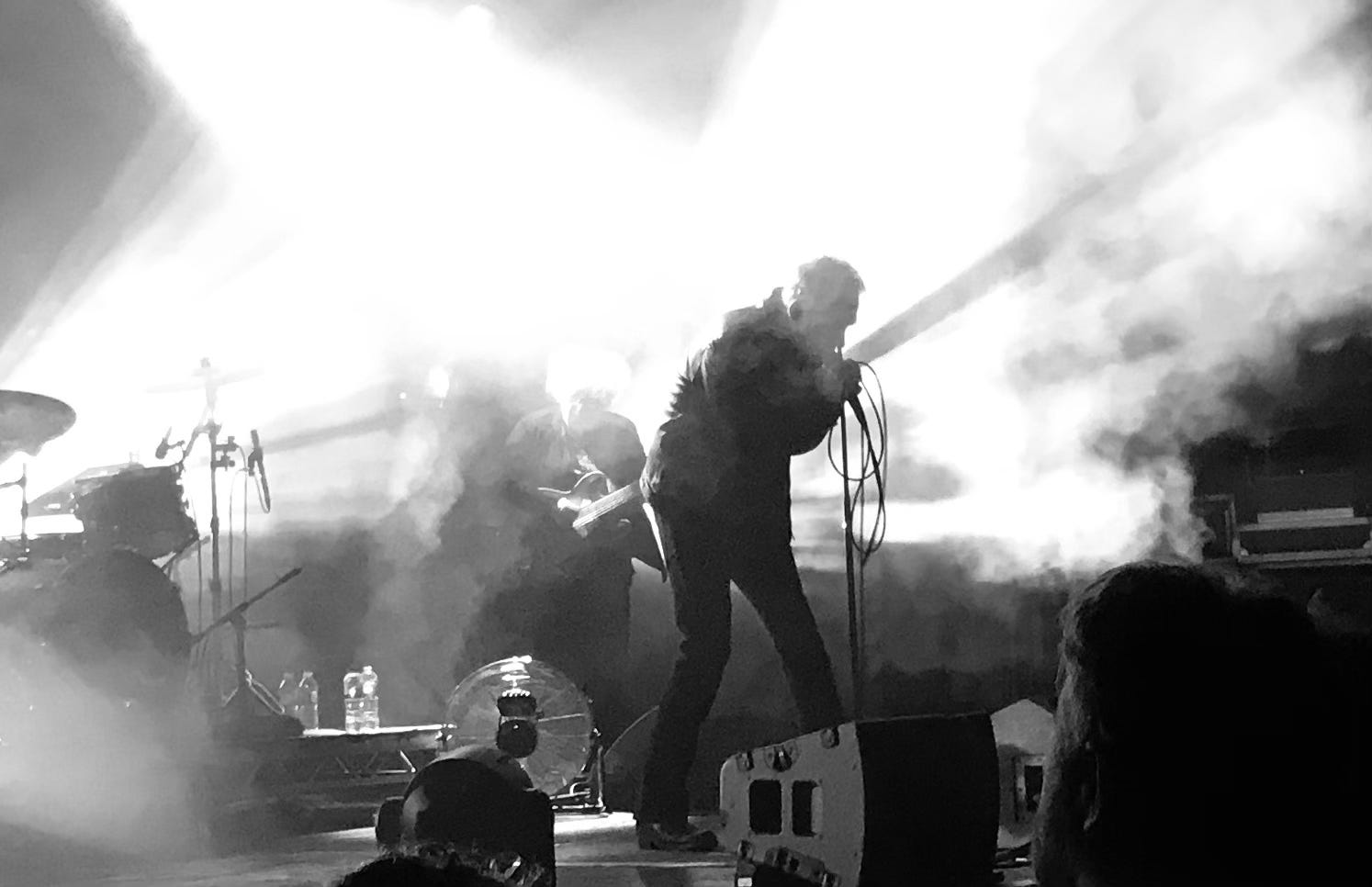
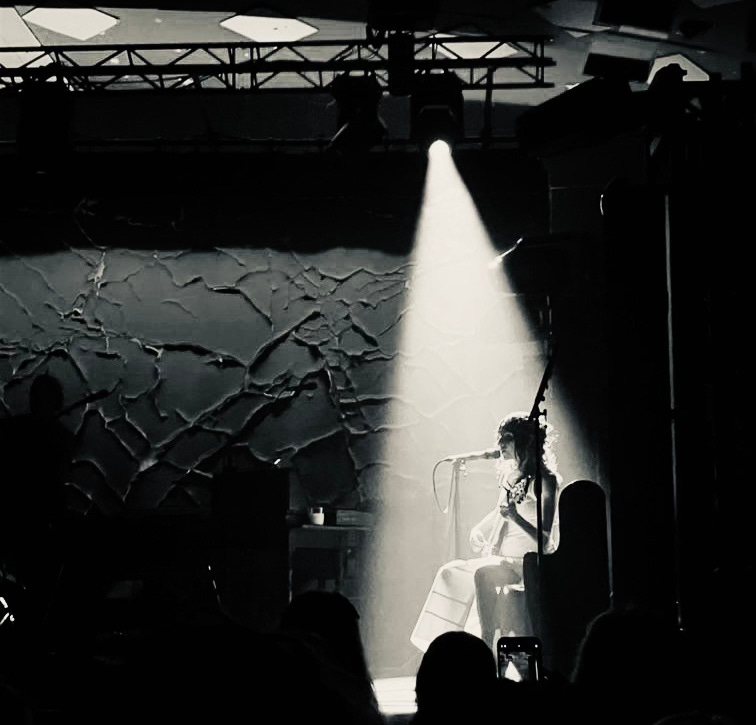
Seeing a band at the Barrowland is different from seeing them anywhere else. The energy and atmosphere; the smell of drink and scent, anticipation and sweat. Dust and dry ice drift through blue, orange and pink lights. The ceiling is set with diamonds and stars; the latter being sought-after souvenirs for the musicians who play here. David Bowie was said to have one framed in the toilet of his Paris home.
At around 7pm, when the doors open, the crowds pour in like bevvy down a drouthy throat. Above them, hanging from the ceiling, is a cart wheel encircled in red neon. This is what remains of a model – a market trader pushing a barrow – that used to be on the roof. From the flames of the fire, all that survived was this solitary cart wheel, so, on rebuilding, it was given pride of place above the stairs. Few, in their excitement to get in and see the band, even notice this holy relic, but it is the heart of the place, and to pass beneath is a sort of benediction.
I think of the dancefloor sometimes. Canadian maple, sprung for bounce. All those stamping feet, the point of contact between place and people. The most important part of Michelangelo’s Sistine Chapel ceiling is the three-quarters of an inch from the Hand of God to the hand of man. Likewise the Barras, where a similar holy distance separates the floor and the boots of fans jumping up and down at the front.
The Barrowland sign, though, that’s the thing.
It looks big, but is bigger than you think. The letter B is eighteen feet from bottom left to top right.
It looks old, but is younger than you think. The sign was switched on for the first time on Sunday 11 August 1985. Russ Abbot did the honours. Glasgow provided the weather; it was pissing down, of course.
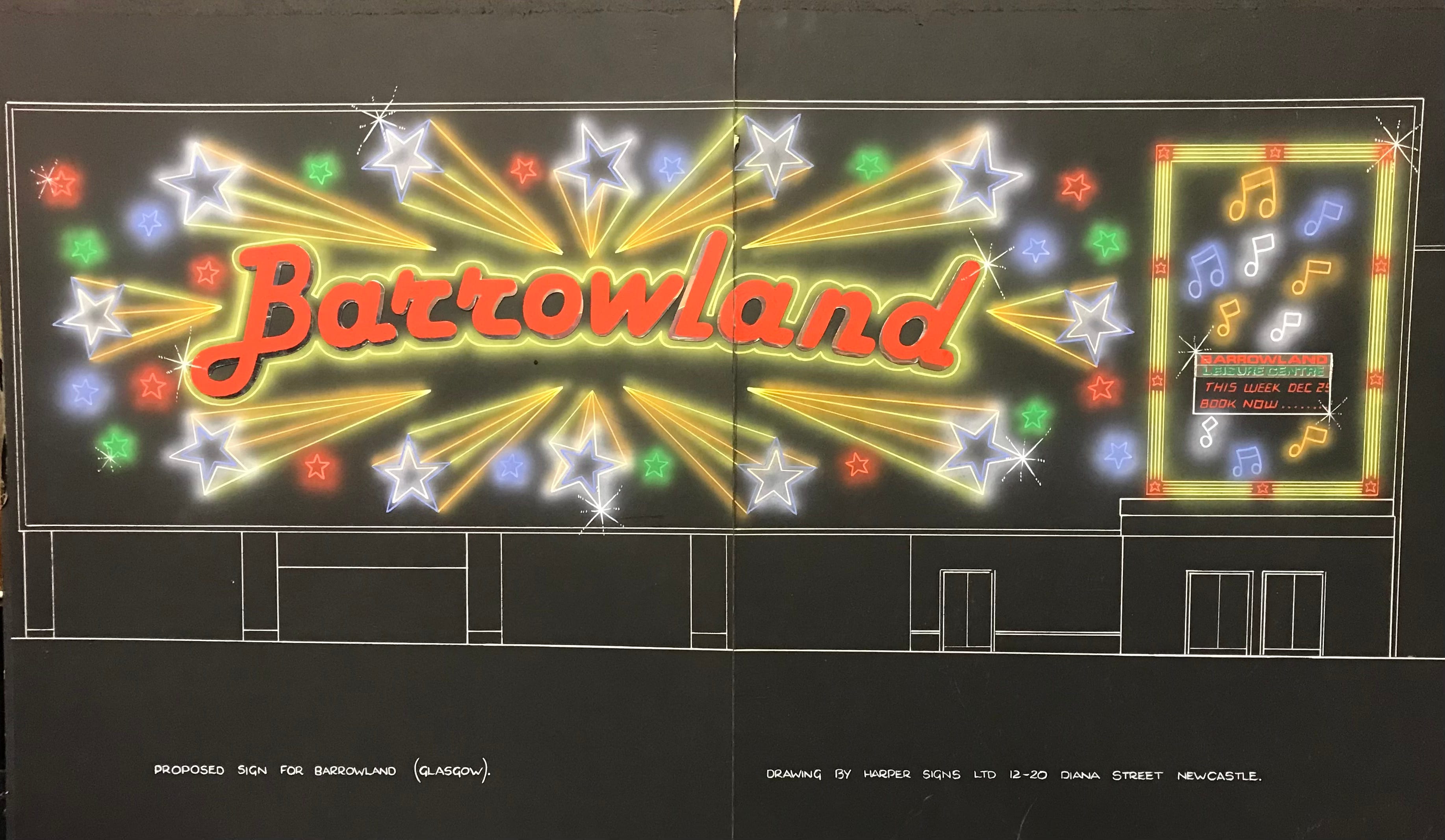
According to a drawing that formed part of the proposal, the sign was to have had a further design element: a cascade of musical notes above the entrance canopy – but lack of budget meant that this was never made. There are now plans to install a video screen in this space that will promote forthcoming performances. An application has been submitted to the council. Tom Joyes, the general manager, says that no-one is more aware than him that the sign must not be upstaged by the screen. No need to spell it out: that would be sacrilege.
The sign has become emblematic of the city. In part, that’s personal association. You see its lights and think of nights there. First gigs. First pints. First dates. Your mum and dad met there, maybe, or it’s where you met your husband, or it’s where you saw the Pogues the night after Jock Stein died and Cait O’Riordan dedicated ‘I’m A Man You Don’t Meet Every Day’ to his memory and everyone chanted his name.
For me the sign means certain songs at certain gigs. Polly Jean Harvey singing White Chalk. Ian McCulloch singing Ocean Rain. Bob Dylan singing Like A Rolling Stone – or trying to sing it, but the crowd taking the song away from him, making it their own, singing it as it sounds on the record. Dylan could have considered that an affront, given his insistence on bending his work into strange new shapes, but he seemed to understand that this noise was love – and so he grinned, accepted the tribute, and paid his own: ‘I must say you’re the best singing audience that we’ve ever had. We musta played that song a thousand times and nobody could sing with it.’
Musicians say this sort of stuff wherever they go in the world. Dylan doesn’t.
The Barrowlands is special. It’s alive. Like a rolling stone, it keeps going. Like neon, it’s a gas. You could spend your life attending gigs there and death need not be the end. In the loft above the famous ceiling, the ashes of two music fans lie scattered. They have gone beyond the stars.
Lovely! Dylan at Barrowland - that would be a thing.
A lovely piece. Thank you. Russ Abbott? 😘 My abiding memory is john the beast pulling an apple from his arse and flinging it into the crowd prior to a carter usm concert.